Ex Parte Reexamination 2024: Annual Report
330 utility-patent ex parte reexamination filings in 2024, continuing the post-2020 climb. Outcome distributions, examiner caseload, and 2025 outlook.
The 2024 ex parte reexamination calendar closed with 330 utility-patent filings, a 4% uptick from 2023 (316 filings) and the highest annual count in the post-AIA window through 2024. Filings have been climbing year-over-year since 2020 (198 filings), tracking a slow recovery from the post-AIA trough when most invalidity challenges had migrated to inter partes review.
All filing and outcome counts in this report cover utility-patent ex parte reexaminations. Design and reissue reexams are tracked separately.
The five-year trend
Annual ex parte reexamination filings, 2020-2024:
- 2020: 198 filings
- 2021: 299 filings
- 2022: 299 filings
- 2023: 316 filings
- 2024: 330 filings
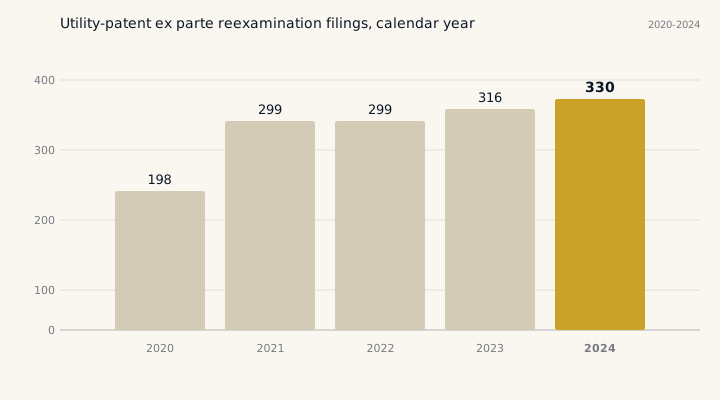
After the 2020 floor, the procedure has run between roughly 300 and 330 filings per year, a plateau with modest upward drift. None of the four years from 2021 through 2024 has shown a single-year jump above the 6% range. The volume signal through 2024 is stability, not change.
Composition
Across the closed reexams , the third-party share of filings has historically dominated. Patent owner filings, used primarily to strengthen a patent before licensing or litigation, represent a smaller fraction. The 2024 calendar appears consistent with this historical pattern, with patent owner filings tracking a relatively stable annual baseline.
The composition matters for forecasting. Third-party filings are sensitive to PTAB practice and to the perceived effectiveness of IPR. Patent owner filings track portfolio-management cycles. The procedural environment for IPR through 2024 has been broadly stable, with discretionary denial practice predictable enough for petitioners to plan around. Whether that holds into 2025 is the open question.
Outcomes from closed reexams
Across the 4,500+ ex parte reexams that have reached final disposition since 2012, the outcome distribution is:
- Reexamination certificate issued: 94% of closed cases.
- SNQ denied at the gate: approximately 5%.
- Other termination: approximately 1%.
A "certificate issued" outcome does not mean all original claims survived. The certificate records what changed: claims confirmed, claims amended, claims canceled, and any new claims added. Most certificates reflect amendment or partial cancellation rather than full confirmation.
Across closed cases, roughly 24% reach the PTAB on appeal. CAFC review is a smaller fraction still. These ratios have been stable across recent years. The 2024 cohort, still mostly pending, will close out through 2026-2027.
Examiners and pendency
Active reexam examiners at the USPTO number approximately 110. The top examiners by volume each handle 70-110+ reexams since 2012. Pendency varies materially across the population: the average is 17.4 months from filing to final disposition, with individual examiner averages ranging from roughly 12 months to over 24 months.
For a 2024 filing, the realistic timeline forecast depends on examiner assignment more than on any aggregate index figure. Patent owners and challengers planning around 2024 filings should expect outcome dispositions concentrated in 2025-2026.
What to watch in 2025
Three storylines worth tracking:
First, PTAB discretionary denial practice. The framework has been broadly stable through 2024, but the procedural environment at the PTAB is subject to leadership transitions and policy review. Any shift in how the PTAB treats Fintiv factors or related discretionary denial doctrine would change the cost-benefit calculation for IPR petitioners, and could redirect challenger filings into ex parte reexam.
Second, USPTO leadership transitions. The procedural priorities at the USPTO can shift materially with changes in the Director's office. The reexam procedure has been operationally consistent for years, but procedural review could open new vehicles or close existing ones.
Third, the patent eligibility landscape at the Federal Circuit. Reexam outcomes interact with parallel district court invalidity practice. Federal Circuit rulings on claim construction, written description, and obviousness shape both the procedural value of reexam and the strategic environment for the patents that go through it.
The 2024 calendar was steady. The procedural environment around it is less so. 2025 will be the first year in which any of these uncertainties resolves into a clear direction.